Flash flooding is the sharpest threat facing campers at Mojave National Preserve, with 16 flash flood events recorded across San Bernardino County alongside 11 additional flood incidents — making water-related hazards far more dangerous here than most desert visitors expect. Thunderstorm wind (11 events) and lightning (2 events) round out a storm profile that can turn a clear afternoon into a life-threatening situation with little warning.
When a storm is in the forecast, avoid setting up camp in dry washes, canyon bottoms, or any low-lying area that channels runoff — the desert's hardpan soil absorbs almost nothing, so water moves fast and far. Pack a NOAA weather radio or download an offline radar app before you lose cell service on the drive in. If you hear thunder, move your vehicle to higher ground immediately and stay inside until 30 minutes after the last strike.
Top recorded hazards in San Bernardino County
County dataFrom NOAA Storm Events (2024). Counts of recorded incidents — not all occurred at this park.
- Flash Flood 16
- Flood 11
- Thunderstorm Wind 11
- Heavy Rain 5
- Hail 3
- Lightning 2
Gear keyed to this park's risks
Recommendations driven by the actual hazards above. As an Amazon Associate we earn from qualifying purchases.
Own this campground? Get featured.
Premium listing slots for verified owners — show photos, amenity details, and direct booking links above the standard data card. Drop your contact info and we'll reach out.
About Mojave National Preserve
Mojave preserves a diverse mosaic of ecological habitats and a 10,000 year history of human connection with the desert. Offering extensive opportunities to experience desert landscapes, the preserve promotes understanding and appreciation for the increasingly threatened resources of the Mojave Desert. This remote preserve encourages a sense of discovery and a connection to wild places.
Weather
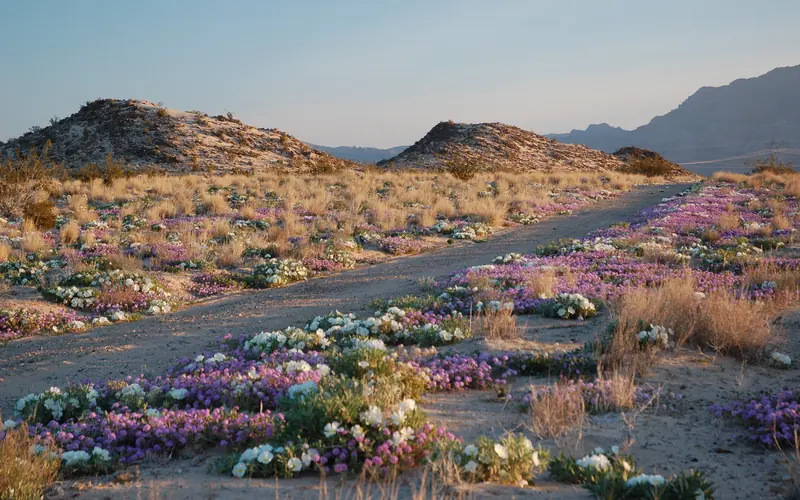
Mojave Desert experiences change with the seasons. In winter, freezing temperatures and strong winds can be expected, with rain and snow in the mountains. With enough moisture, spring wildflowers may carpet the desert floor with vivid colors. Summers are hot, and temperatures above 100 degrees Fahrenheit are typical. In summer, adventurers head for the higher elevations such as Mid-Hills and the New York Mountains. The cooler temperatures of fall mark hunting season.