Thunderstorm wind is the dominant threat at Fredericksburg & Spotsylvania National Military Park, with 732 recorded events in Virginia's hazard data — nearly double the next closest risk. Flash flooding compounds the danger, with 281 flash flood events logged alongside 169 additional flood incidents, meaning low-lying battlefield trails and parking areas can become dangerous quickly when storms roll through the region.
Before arriving, download a NOAA weather radar app and check forecasts the morning of your visit, since afternoon storms can build fast in summer. Pack a waterproof rain shell and keep it accessible in a daypack rather than buried in your vehicle, and identify the nearest brick or concrete park structure on the map ahead of time — the visitor center makes a solid storm shelter. If skies darken during a battlefield walk, move away from open fields and tall monument markers immediately and head for hard cover.
Top recorded hazards in Virginia
State dataFrom NOAA Storm Events (2024). Counts of recorded incidents — not all occurred at this park.
- Thunderstorm Wind 732
- Flash Flood 281
- Flood 169
- Heavy Rain 150
- Winter Weather 143
- High Wind 82
Gear keyed to this park's risks
Recommendations driven by the actual hazards above. As an Amazon Associate we earn from qualifying purchases.
Own this campground? Get featured.
Premium listing slots for verified owners — show photos, amenity details, and direct booking links above the standard data card. Drop your contact info and we'll reach out.
About Fredericksburg & Spotsylvania National Military Park
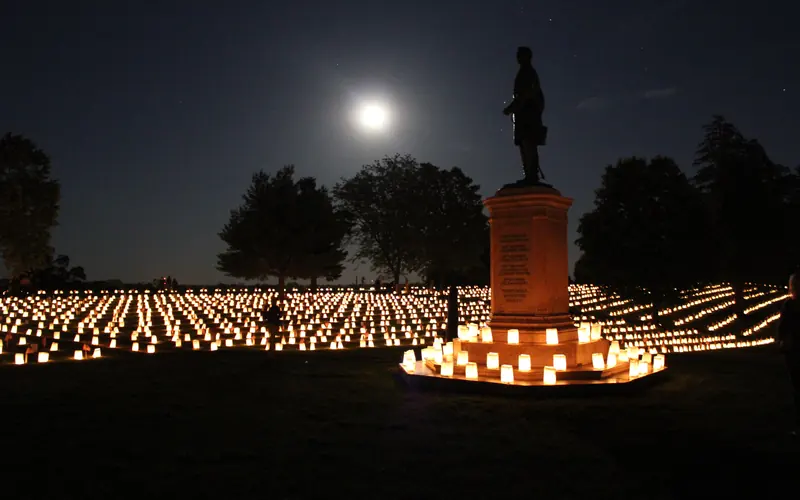
Fredericksburg, Chancellorsville, Wilderness, and Spotsylvania, this is America's battleground, where the Civil War roared to its bloody climax. No place more vividly reflects the War's tragic cost in all its forms. A town bombarded and looted. Farms large and small ruined. Refugees by the thousands forced into the countryside. More than 85,000 men wounded; 15,000 killed--most in graves unknown.
Weather
The regional climate is characterized by mild winters and warm, humid summers. The mean annual temperatures is 56 degrees Fahrenheit. The average summer temperature is 75 degrees Fahrenheit. Daytime highs during the summer can reach the 90s, and nighttime lows are in the lower 60s. Daytime highs in the winter are typically in the upper 40s, and nighttime lows in the middle 20s. Precipitation is well distributed throughout the year, with the minimum amount in August and the maximum in February.