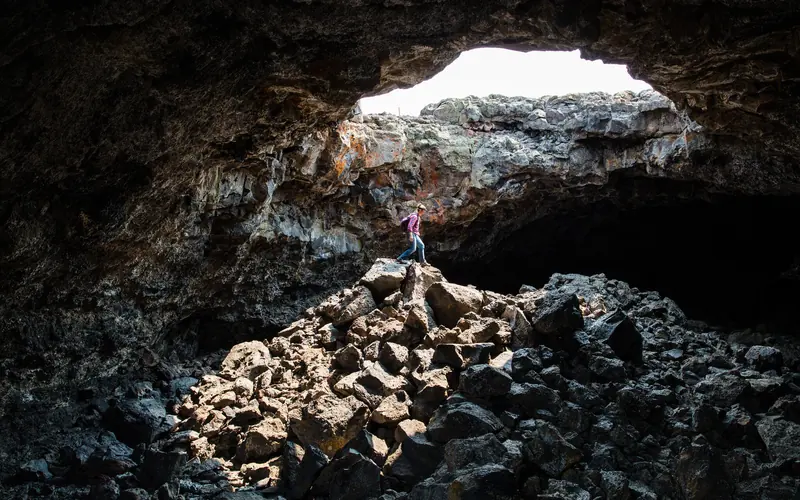
The standout safety concern at Craters of the Moon is neither crime nor dramatic weather — it's the volcanic landscape itself, amplified by the area's limited hazard history. Blaine County recorded just 2 thunderstorm wind events as its only notable weather incidents, and violent crime sits at a relatively moderate 242.5 per 100,000 residents. With virtually no recorded injuries or fatalities in the hazard data, the real risk here is the terrain: sharp lava rock, unmarked drop-offs, and radiant heat from dark basalt that can exceed 150°F on summer afternoons.
Pack closed-toe shoes with thick, rigid soles — trail runners and sandals shred quickly on lava rock and offer zero ankle protection. Bring significantly more water than you think you need, at least one liter per person per hour in summer, since the black rock creates an intense heat sink and shade is nearly nonexistent. If afternoon thunderstorms roll in, get off open lava fields immediately, as the flat exposure offers no shelter from lightning.

Top recorded hazards in Blaine County
County dataFrom NOAA Storm Events (2024). Counts of recorded incidents — not all occurred at this park.
- Thunderstorm Wind 2
Gear keyed to this park's risks
Recommendations driven by the actual hazards above. As an Amazon Associate we earn from qualifying purchases.
Own this campground? Get featured.
Premium listing slots for verified owners — show photos, amenity details, and direct booking links above the standard data card. Drop your contact info and we'll reach out.
About Craters Of The Moon National Monument & Preserve
Craters of the Moon is a vast ocean of lava flows with scattered islands of cinder cones and sagebrush. We invite you to explore this "weird and scenic landscape" where yesterday's volcanic events are likely to continue tomorrow.
Weather
Weather at Craters of the Moon is characterized by hot summers and cold winters. In February, average snow depth ranges from 26 inches at the north end of the monument to just 2 inches at the south end. Intense summer sun bakes the black lava, generating surface temperatures of 170°F and air temperatures in the 90s. Drying winds are a daily occurrence, especially in the afternoon, and may reach 15 to 30 miles per hour.