Best SUVs for Towing a Camper (2026 Picks)
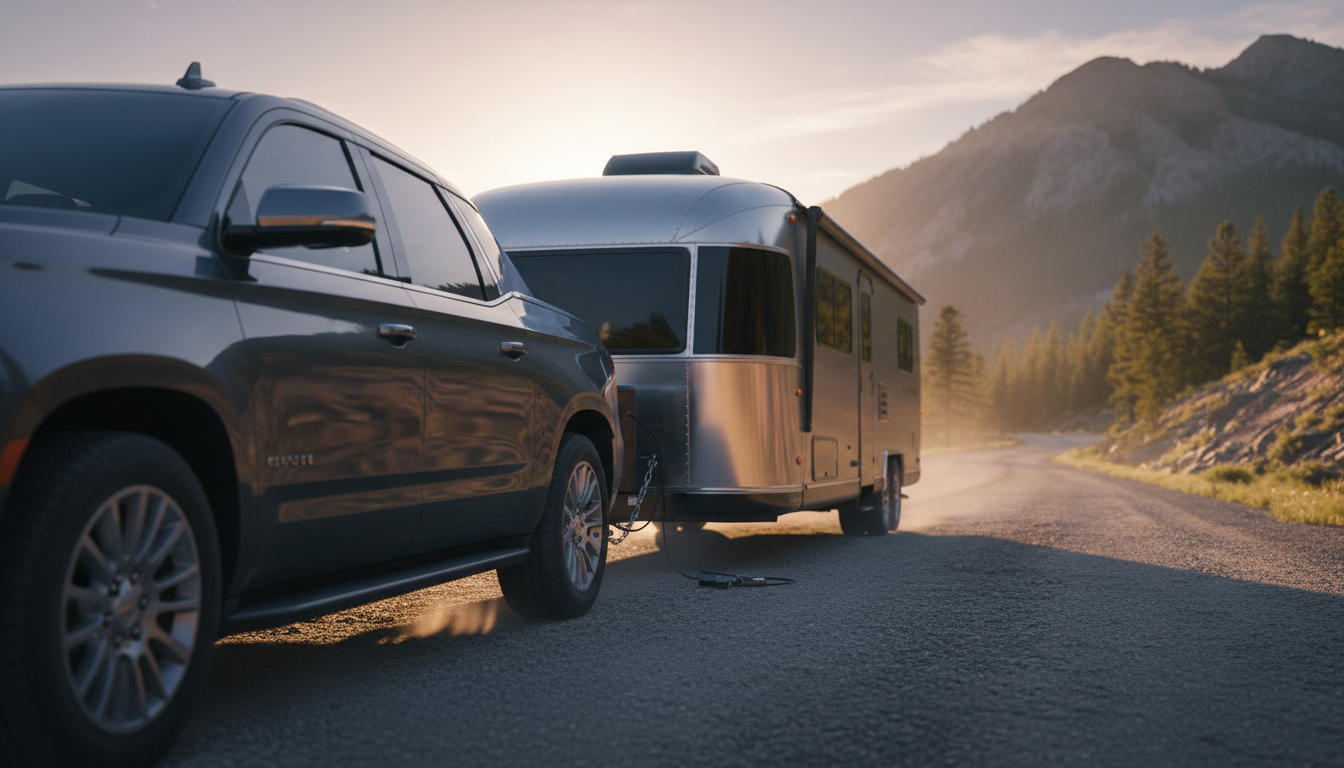
Matching an SUV to a camper isn’t just about tow rating. Payload, hitch receiver class, transmission cooling, and wheelbase all determine whether the combination is safe and comfortable or white-knuckle on a mountain grade. These are the SUVs that consistently earn their keep as tow vehicles — ranked by how well they handle real camping rigs, not just spec-sheet numbers.
What to Check Before You Shop
Gross Vehicle Weight Rating (GVWR) minus curb weight equals payload. That payload has to cover passengers, gear, tongue weight, and any added hitch equipment. A lot of SUVs with 7,500 lb tow ratings have 1,200–1,400 lb payloads, which disappears fast when you load four adults and a full hitch setup.
Tongue weight typically runs 10–15% of trailer weight. A 6,000 lb camper puts 600–900 lbs of tongue weight on the hitch — before your passengers and luggage. Check the Monroney sticker’s specific payload, not the class maximum.
Ford Expedition — Best All-Around for Heavy Campers
The Expedition Max with the 3.5L EcoBoost pulls up to 9,300 lbs. Payload on well-optioned trims runs 1,500–1,900 lbs, which is meaningful headroom. The integrated trailer brake controller, Pro Trailer Backup Assist, and standard 2-inch receiver make it a complete tow package without aftermarket work.
It’s a full-size platform, so parking and fuel economy aren’t its strengths. But if you’re pulling a 26–32 ft travel trailer or a mid-size fifth-wheel with a special adapter, nothing in the SUV segment matches its combination of capacity and driver-assist features. The Expedition is the tow vehicle most comparable to a half-ton truck in actual capability.
Chevy Tahoe / GMC Yukon — Strong Payload, Proven Drivetrain
The Tahoe and Yukon share a platform with the Silverado 1500. Max tow is 8,400 lbs with the 5.3L V8 and Max Trailering Package — a $625 option you should always add. Payload hits 1,600–1,800 lbs on base and LS trims (heavier luxury trims eat into it).
The 10-speed automatic handles trailer loads well, and the integrated trailer brake controller is standard across most trims. The Yukon XL and Tahoe wheelbase difference matters on steep grades: longer is more stable. If you’re already a GM truck owner, the ecosystem (hitches, brake controllers, wiring) transfers directly.
Toyota Sequoia — Best for Reliability-Focused Buyers
The third-gen Sequoia runs a twin-turbo 3.4L V6 hybrid. Tow rating is 9,000 lbs, and the electric motor torque actually helps on sustained climbs — a weak point for many naturally aspirated V8s. Payload is tighter than the domestic competition, typically 1,400–1,600 lbs depending on trim.
Toyota’s reputation for drivetrain durability gives it an edge on high-mileage towing use. The i-FORCE MAX hybrid system doesn’t require any changes to how you hitch or brake — it works with any factory-compatible brake controller. If you’re looking for a lower long-term ownership cost tow vehicle, the Sequoia is worth the higher purchase price.
Jeep Grand Cherokee L — Best Mid-Size Option
The Grand Cherokee L (three-row) with the 5.7L Hemi V8 rates at 7,200 lbs. That covers most lightweight travel trailers, pop-ups, and small hybrids in the 4,000–6,000 lb range. Payload is modest — usually around 1,200–1,400 lbs — so watch your tongue weight closely.
For campers like an Airstream Bambi or a sub-5,000 lb hybrid trailer, the Grand Cherokee L hits the sweet spot: manageable size, good driver visibility, and a capable suspension. The Quadra-Lift air suspension helps level the tow stance when loaded. Not a choice for heavy trailers, but for the growing segment of smaller, lighter campers it’s properly sized.
Tow Package Essentials for Any of These SUVs
Whatever you pick, these add-ons matter more than the base tow rating:
- Weight distribution hitch: Required if tongue weight exceeds 10% of your SUV’s payload
- Andersen Hitches Weight Distribution System: Works with most 2-inch receivers, easier to set up than traditional bar hitches
- Tekonsha Prodigy P3 Brake Controller: If your SUV doesn’t have an integrated controller, this is the benchmark aftermarket unit
- Reese Towpower 2-inch Receiver Hitch: For SUVs that need an aftermarket hitch installed
- Extended tow mirrors: Non-negotiable if your camper is wider than the tow vehicle
Don’t skip the trailer wiring harness inspection on used vehicles. Corroded 7-pin connectors cause brake controller faults and running light failures — both safety issues, not inconveniences.
Deciding Between These Picks
Go with the Expedition if you’re pulling 7,000 lbs or more. Choose the Tahoe/Yukon if you want the broadest parts and dealer network and a true V8. Pick the Sequoia if reliability over 150,000+ towing miles is the priority. The Grand Cherokee L earns its place if you’re towing under 6,500 lbs and want a smaller footprint.
The tow rating is a ceiling, not a target. Staying 20% below max tow while keeping tongue weight within payload limits is where comfortable, safe towing actually lives.
Bottom line: The Ford Expedition and Chevy Tahoe lead the category on raw capability and availability of factory tow packages. For lighter campers, the Grand Cherokee L is often the better fit. Match the SUV to the specific trailer weight — dry weight plus loaded gear, not the manufacturer’s GVWR — and verify payload before you sign.